
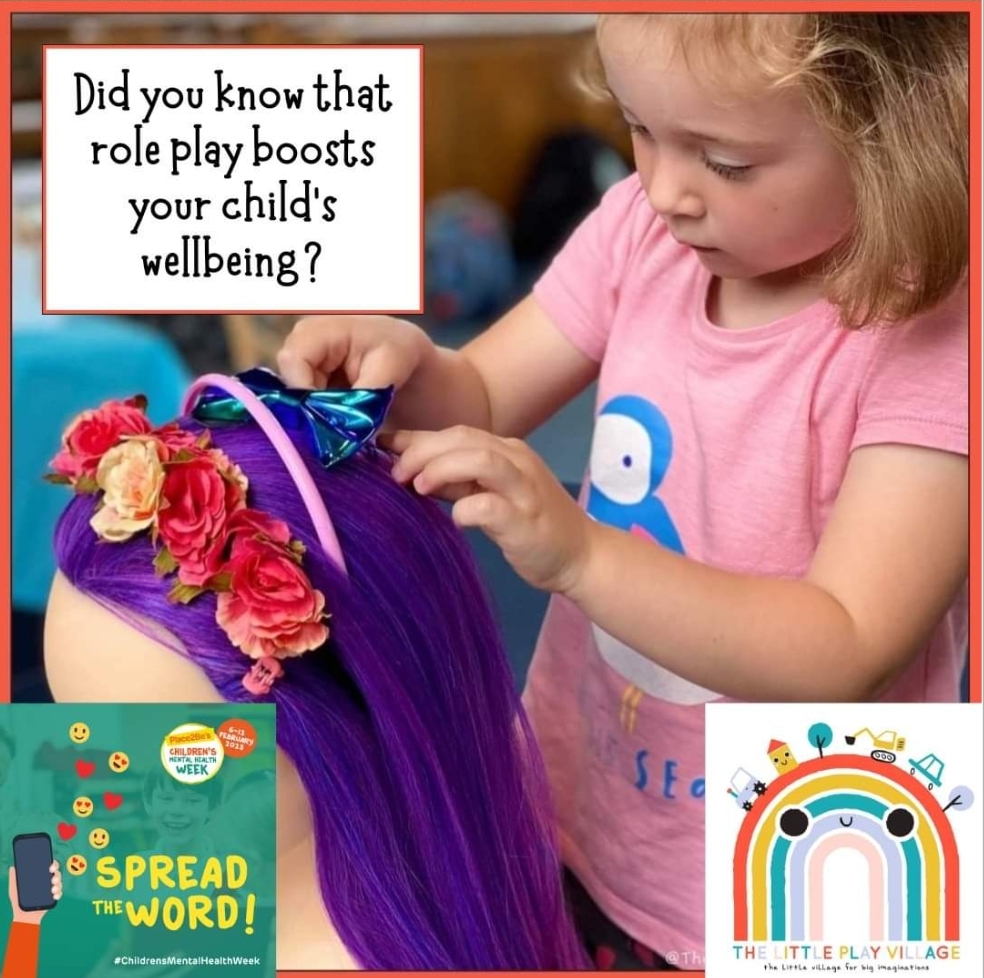
It is Children’s Mental Health Week between 6th and 12th February 2023, with the theme ‘Let’s Connect’. Play is a brilliant way to connect with your child: as well as being lots of fun, there are many amazing benefits for your child’s wellbeing.
Role play can support your child’s wellbeing and development by helping them:
🧡Develop empathy and explore feelings
🧡Express their thoughts and feelings through the voice of a character
🧡Relax in an engaging, language-rich environment
🧡Build relationships and connections with others through collaborative play
🧡Build confidence and self-esteem
#1 (and #2) Role Play helps children develop empathy and explore feelings
Have you ever spotted your child pretending to be a doctor or vet, looking after one of their toys? Did they have a conversation with their ‘patient’, acknowledging their feelings and talking them through what would happen during their appointment?
Maybe they’ve made a pretend cup of tea for a teddy because they were thirsty; or baked them a cake because they were really hungry?
🧡This kind of imaginative play enables our children to make sense of the world; helping them to understand feelings and see things from another point of view. When they are in role, children imagine they are a character rather than themselves, making it feel safe to explore a range of feelings and ideas.

💡Children develop empathy over time, so offering plenty of opportunities to explore it through play will really support their learning.
#3 (and #2) Role Play develops language and communication skills
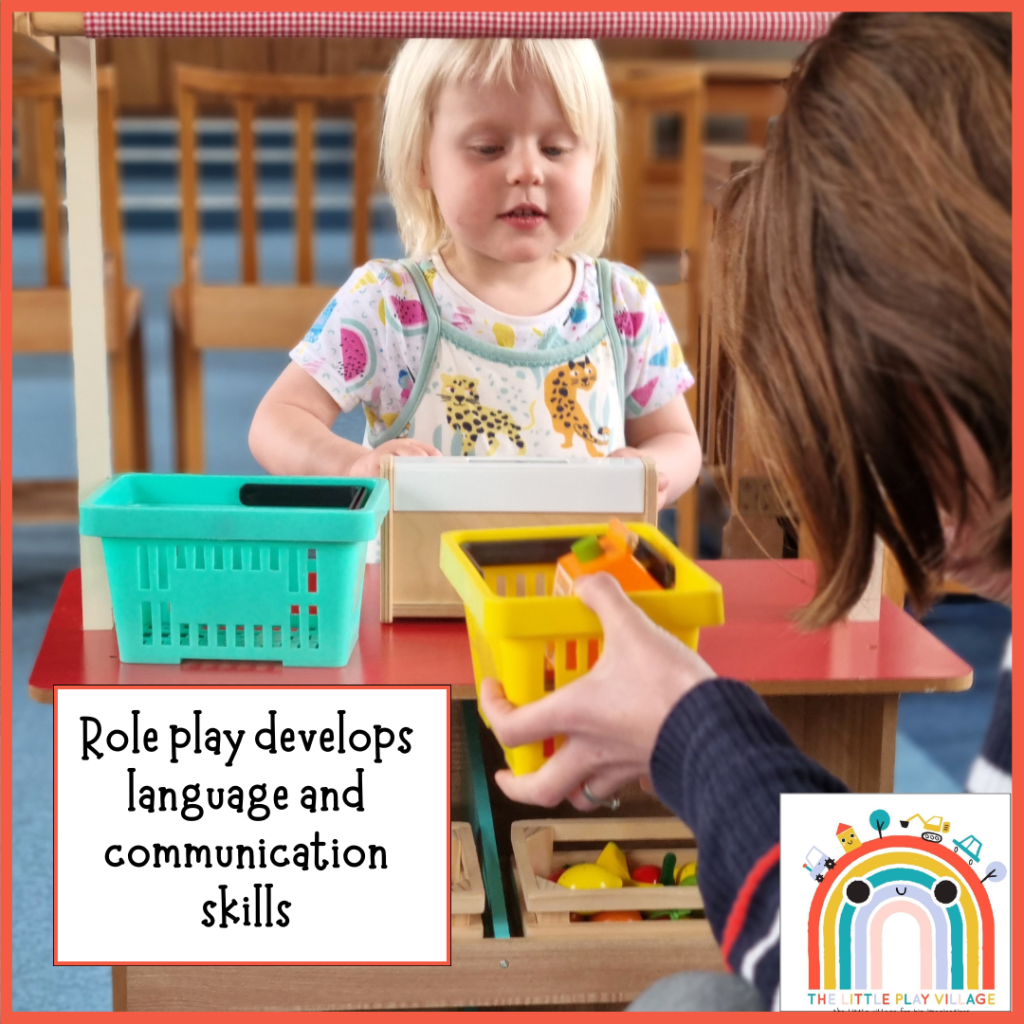
Have you ever overheard your child testing out a new word or phrase while they’re playing? Perhaps they’ve said something using the exact tone of voice you’ve previously used?
This often happens when children are pretending to be a character as it can feel safe. At that moment they aren’t using their own voice, it is the voice of a character. This process helps our children make sense of their world.
🧡Role play also offers children chance to develop their social communication skills. Eye contact, facial expressions, gestures and turn taking are all learnt through play.
💡To broaden your child’s vocabulary further, why not join in and model more complex language? For example, if they offer you a cupcake, you can thank them for the ‘pink/delicious/freshly baked cake’, using language that is appropriate to their age and development stage. You might overhear them using that phrase next time!
#4 Role Play builds relationship and connections with others through collaborative play
How many times have you been a pretend coffee shop customer at home, drinking copious amounts of tea and eating mountains of cake? I bet you’ve had a few imaginary injections and plasters from a 3 year old doctor, too?
🧡Role play often works when there are at least 2 characters or roles to play. By taking on a role and exploring a storyline with another person, your child is learning how to interact and connect with others. They are noticing and trialling different behaviours, different points of view and different ways of responding to a situation.
🧡When children are in a role play setting such as The Little Play Village, they may work alongside others, developing their communication skills and forming relationships. It might only be for a few moments, but each experience strengthens a child’s confidence in forming connections and relationships with others.

💡Children often choose to play independently or with a familiar adult rather than engaging with other children, especially if they don’t know them. This is a very normal stage in their development. Children will still have plenty of opportunities for turn taking and observing how others are interacting.
#5 (and #2 again!) Role Play builds confidence and self esteem

You know that look on your child’s face when they accomplish something new (like building a brick tower taller than they are)? Or how relaxed they are when they jump back into a familiar activity (like making something delicious for their pretend customers to eat or drink)? Those moments are all building your child’s confidence and self esteem, AND they happen all the time through play.
🧡When children interact with familiar toys or explore safe environments, such as those found at The Little Play Village, children begin to know what to expect and feel confident directing their own play. They are more likely to take on a challenge, such as building an enormous ice cream tower, or navigate their environment confidently. This sense of accomplishment then boosts their confidence and self esteem, helping them recognise their strengths and increases their willingness to try something else.
🧡Role play allows children to become another character, which often gives them the confidence to have a go at something new: it reduces the worry that they might get it ‘wrong’ when it’s a character doing it. This increases their self esteem and confidence to try new things in the future.
💡The next time you role play with your child, why not take it in turns to try each role? You can model how to try new things, express your character’s ideas and feelings, which might encourage your child to have a go, too.
As well as boosting children’s mental health role play can help develop other skills, check out our blog post Importance of Role Play to find out more. To find out more about supporting children’s mental health head to Place2Be.
Head to our Role Play Sessions page to find out more about what goes on in our sessions.