If you’ve ever heard a toddler proudly announce “I did it!” after something seemingly small — like putting on a shoe, stacking a block, climbing a step—you’ve seen confidence being built in real time.
Confidence in early childhood isn’t about them getting it right all the time. It’s about helping children feel safe to try, safe to fail, and safe to try again.
Between the ages of 2 and 5, children are forming some of their earliest beliefs about themselves:
Am I capable? Am I safe to explore? Do the people around me believe in me?
The good news? Confidence grows through everyday interactions, small wins, and playful moments.
Here are some simple, science-backed ways to nurture it.
1. Let Them Try First (Even When It’s Slower)
Young children build confidence by doing, not by being helped too quickly.
Psychologists often refer to this as developing a sense of competence. When children successfully complete small challenges, their brains build the expectation:
“I can figure things out.”
That might mean:
- Letting them climb onto the chair themselves
- Giving them time to put on their shoes
- Allowing them to pour their own drink (with a little spill tolerance!)
Instead of jumping in right away, try saying:
- “You’re working really hard on that.”
- “I’ll stay right here while you try.”
- “You’re figuring it out.”
Your calm presence acts like a safety net.

2. Praise the Effort, Not Just the Result
Children who are only praised for being “clever” can become worried about making mistakes.
Confidence grows stronger when we highlight effort and persistence.
Instead of:
❌ “You’re so smart!”
Try:
✔ “You kept trying until it worked.”
Instead of:
❌ “That’s perfect!”
Try:
✔ “You worked really hard on that.”
These small shifts help children see themselves as capable problem-solvers, not just performers who need to be perfect.
3. Use Play That Puts Them in Charge
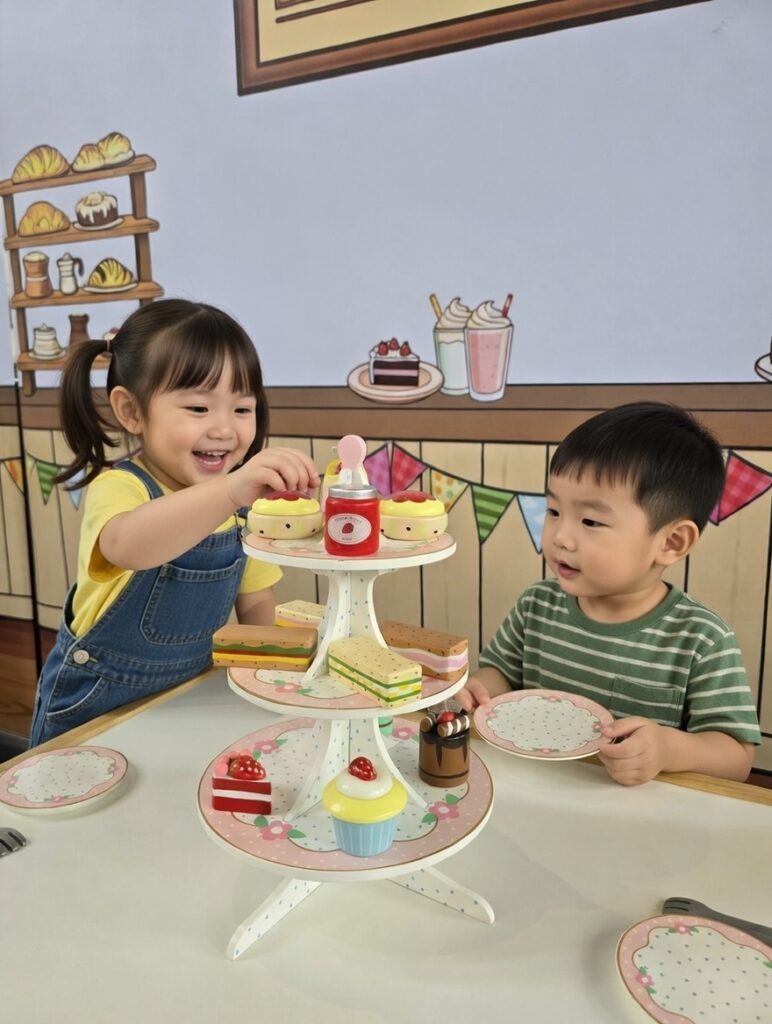
Play is one of the most powerful ways children build confidence.
Role play is especially helpful because children get to practise being capable.
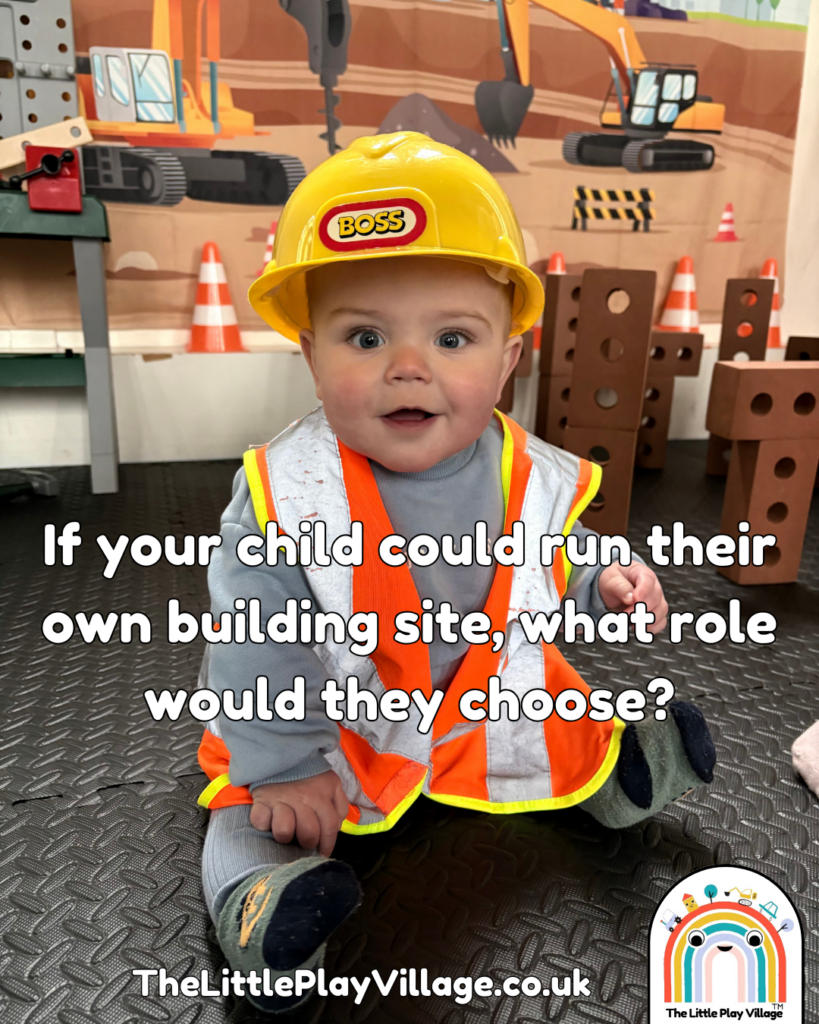
For example, with a role play building site, children might become:
- the builder
- the site manager
- the engineer fixing the problem
Suddenly, they’re making decisions, solving problems, and leading their play.
You can support this by saying things like:
- “What should we build today?”
- “Uh oh… the road is broken. What does the builder do?”
- “You’re the boss of the building site.”
Even shy children often become confident when they’re in character.
4. Normalise Mistakes
Confidence doesn’t mean always getting things right.
In fact, confident children usually have one important belief:
Mistakes are part of learning.
This is called a ‘Growth Mindset’.
When something goes wrong, keep your response relaxed.
Try:
- “That didn’t work this time.”
- “Hmm… what could we try next?”
- “How could we do it differently next time?
Your reaction teaches them whether mistakes are scary or just part of trying.

5. Stay Close While They Explore
Children explore best when they feel secure.
Research around early attachment shows that children become more confident when they know a trusted adult is nearby. This is sometimes called a “secure base.”
Think of it like a charging station.
They venture out → come back for reassurance → head out again.
You might notice this during play:
Your child runs off to build something → comes back to show you → runs off again.
A simple response like “Wow, you built that! Tell me about it…” can refill their confidence tank instantly.
6. Give Them Small Responsibilities
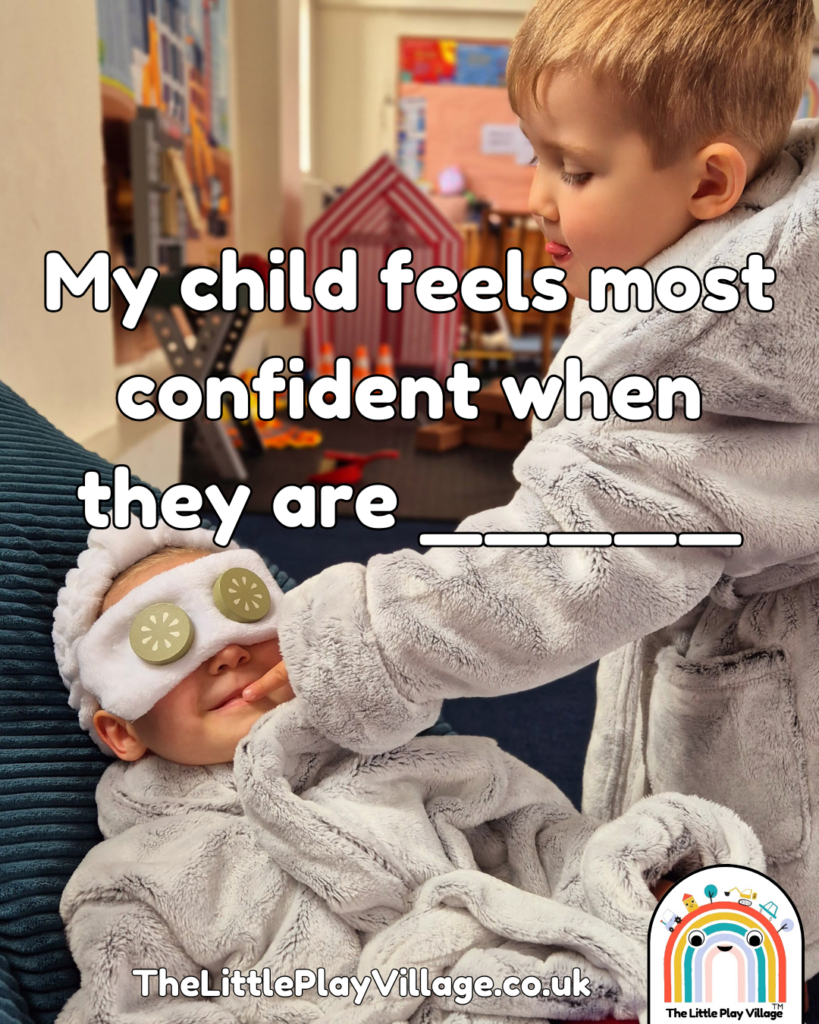
Young children love to feel helpful.
Responsibility tells them:
“You matter here.”
Try simple roles like:
- Snack helper
- Toy tidy-up leader
- Tool holder on the “building site”
- Delivering things to family members
You can frame it positively:
- “I need a strong builder to help me.”
- “Can you be in charge of this?”
- “You did an important job.”
These moments build a sense of capability.
These moments build a sense of capability.
7. Narrate What You See
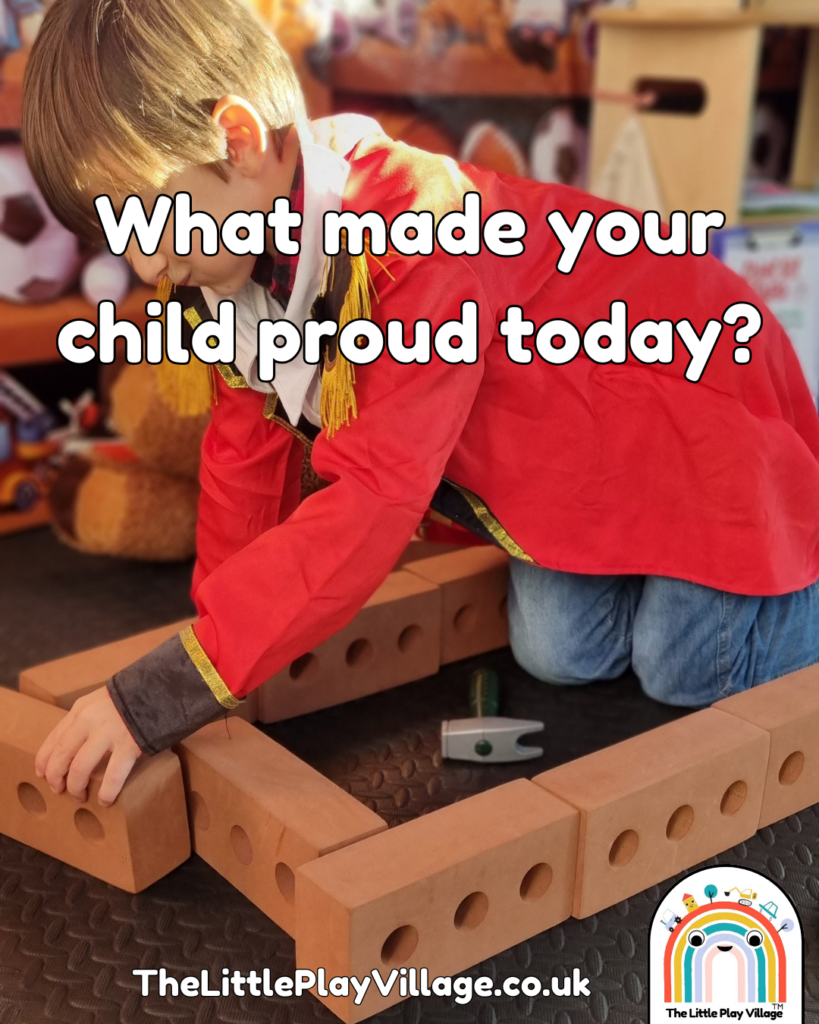
Sometimes the most powerful confidence boost is simply being noticed.
Instead of constant praise, try describing what your child is doing.
For example:
- “You stacked five of those blocks this time!”
- “You kept digging until the hole was big.”
- “You didn’t give up when it fell down.”
This helps children see themselves as capable people.
8. Celebrate Their Ideas
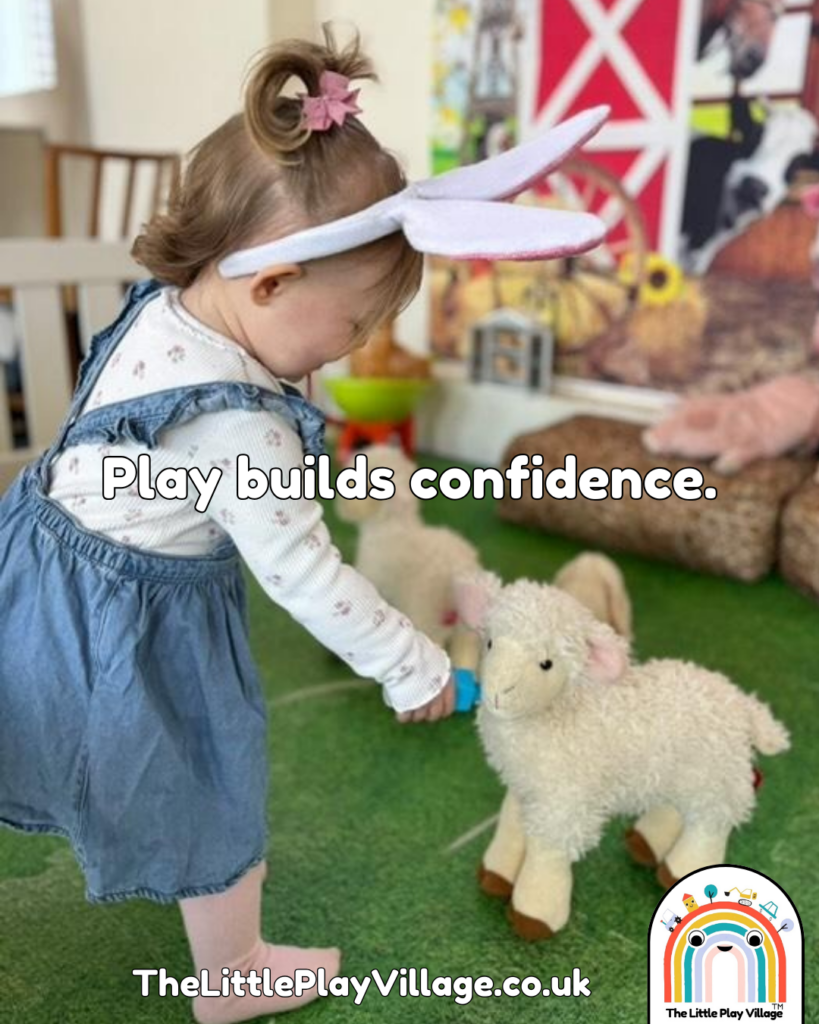
Confidence flourishes when children feel their ideas matter.
If your child says:
“Let’s build a tunnel for the trucks!”
You might respond:
“Great idea. How should we build it?”
Even if their plan is wildly impractical, the message they receive is:
“My thoughts are valuable.”
And that belief sticks.
The Big Secret About Confidence…
Confidence in early childhood rarely comes from big achievements.
It grows from tiny everyday moments like:
- climbing the step
- fixing the broken tower
- pouring the water
- deciding what gets built on the role play building site
When children feel safe, capable, and listened to, confidence grows naturally.
And often the most powerful message we can give them is the simplest one:
“I believe you can do it.”