One of the most common worries I hear from parents of 2–4 year olds is about turn-taking.
“Why won’t they wait?”
“Why do they always snatch toys?”
“Should they be better at this by now?”
The short answer?
They’re still learning and developing. And that learning takes time.
Impulse Control Is Still Developing
Children under 4 are still developing impulse control. In fact, impulse control continues to develop into our mid-twenties!
The part of the brain responsible for waiting, pausing, and thinking before acting (the prefrontal cortex) is still forming, meaning they are not developmentally ready to take turns before then.
So when your child grabs a toy from another child, or gets upset if they need to wait for a toy tobe available to them, it’s an age appropriate response and a sign their impulse control is still developing.
Turn-taking isn’t automatic for our children. It’s a huge skill. And like all skills, it needs to be practised in a safe, supported environment.
Why Role Play Is Perfect for Practising Turn-Taking
Play offers so many opportunities for our children to practise turn taking, observe others modelling it and be supported through the process.
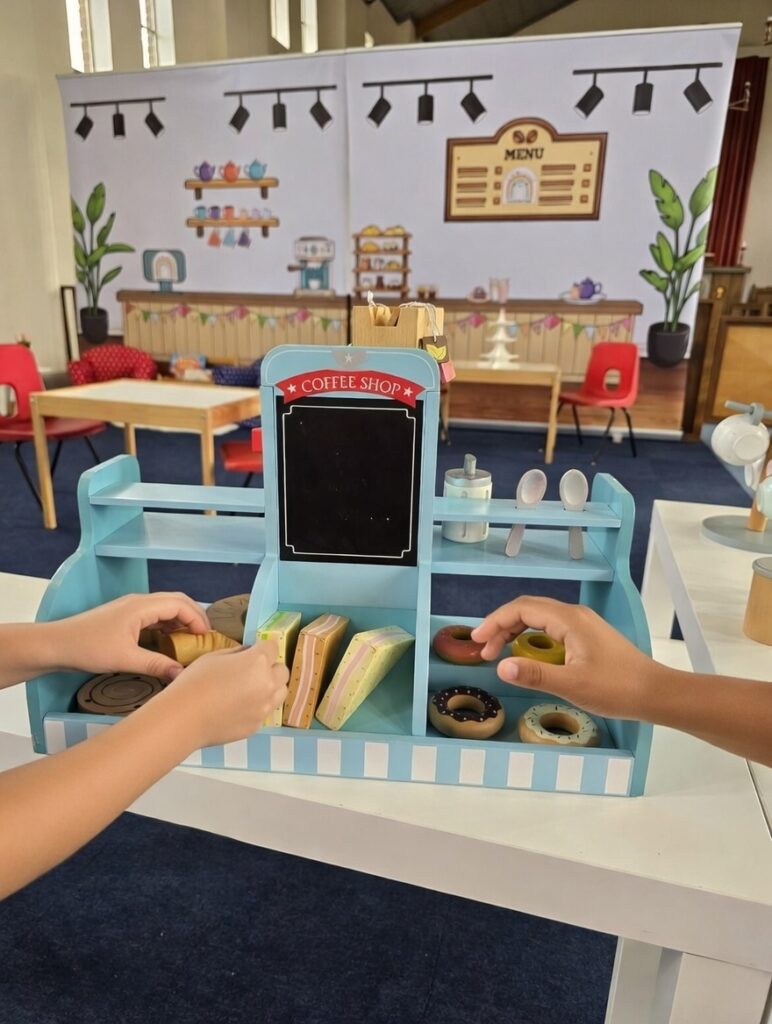
For example, our tea room role play area at The Little Play Village isn’t just a cute set-up (although it is very lovely!). It’s a carefully designed space where children naturally practise social skills – such as turn taking – through play.
In the tea room, children can:
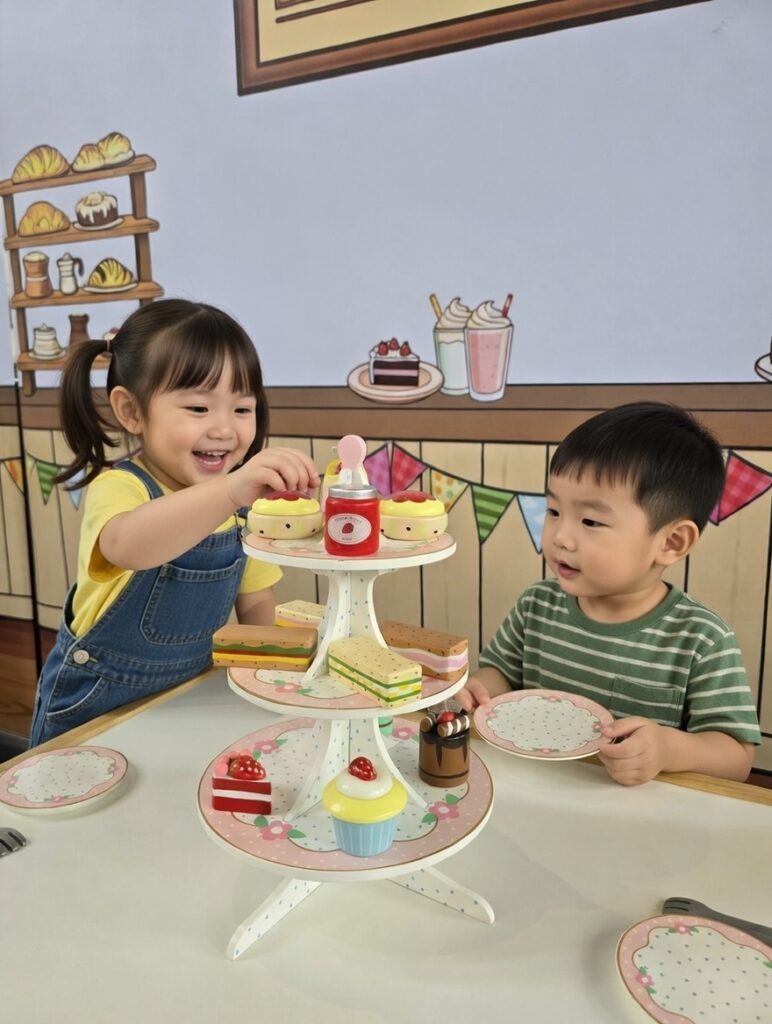
- Take turns being the ‘server’ and the ‘customer’. This gently reinforces the turn taking of holding certain toys or enjoying different roles.
- Wait while someone prepares their order. This builds experience in pausing before they get time with a toy.
- Negotiate roles and vocalise their wants. For example, “Can I be the server next?” or, “I’d like that cup after you…” This builds a safe space for our children to rehearse vocalising what they want or need from another person.
Because this learning is happening through play, it feels relaxed and fun — not forced. That’s where the real learning happens.
Tips to Support Turn-Taking
As an educator, parent and a Learning Through Play Facilitator at The Little Play Village, I’m often supporting children in their turn taking. Here are some phrases to try when supporting turn taking:
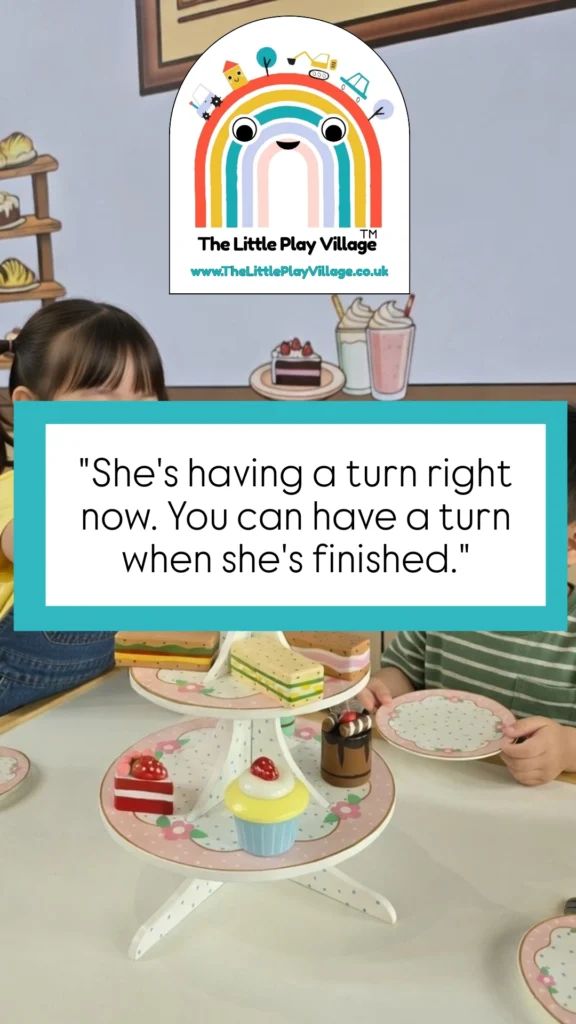
* Modelling language: “She’s just using it right now… you can have a turn when she’s finished.”
* Narrating: “You’re waiting for your turn. That can feel tricky.”
* Suggesting solutions: “How much longer do you need with the toy? Shall we use a timer? We can pass it on when the timer ends.”
* Refucussing while waiting: “What can we play with while we wait for our turn?”
These are all helping children find the words they need, often advocating for them and helping them navigate what can be a very emotional exchange!
If a child has taken a toy from your child before they are finished with it, don’t be afraid to gently but firmly explain that your child was having a turn with it and that you’ll pass it on when they have finished.
A Little Note on Sharing
Here’s something that might surprise you: I don’t force sharing between my own children or at The Little Play Village.
Why? ‘Sharing’ can often equate to a toy being taken away from a child before they’ve finished using it. This can feel unfair, frustrating and unjust to that child. As an adult, I’d feel pretty miffed if someone decided I’d looked at something for long enough and whipped it out of my hands so someone else could look at it. I’d be feeling all kinds of feelings about that!
Instead of insisting a child gives something up immediately, we can focus on turn-taking. For example, “You’re using it now. When you’re finished, it will be Sam’s turn.”
This approach helps children feel safe. They know what to expect. It also gives them the tools to verbalise their own turn taking needs as they grow up.
Until Then?
If your toddler or pre-schooler struggles to wait to take their — that’s very normal. As we’ve explored, the prefrontal cortex is underdeveloped at this age and impulse control may not be fully developed until our mid-twenties.
However, with repetition, modelling, and gentle support, their ability to pause, wait and consider others’ wants and needs grows stronger. It doesn’t happen overnight, but it does happen.
In the meantime? Play spaces like ours at The Little Play Village offer plenty of opportunities to practise. We create beautiful, exciting play spaces where children can practise — again and again — through play.
Because play isn’t separate from learning.
It is the learning.